The tank is one part of a matched cooking system that also includes the stove's internal fuel pump, air pump, blower, controller and burner. Capacity alone is not enough: buyers should confirm installation space, hose routing, expected runtime, refill procedure, filled handling weight and the fuel specification available in the destination market.
Confirmed tank dimensions and reference weights
| Capacity | Supplier size | Empty | Reference fuel* | Reference filled total* |
|---|---|---|---|---|
| 15 L | Ø300 × H420 mm | 4.5 kg | 12 kg | 16.5 kg |
| 20 L | Ø300 × H460 mm | 5.0 kg | 16 kg | 21.0 kg |
| 25 L | Ø320 × H520 mm | 5.2 kg | 20 kg | 25.2 kg |
| 30 L | Ø320 × H570 mm | 5.8 kg | 24 kg | 29.8 kg |
*Reference fuel mass uses 0.8 kg/L for preliminary handling calculations. The actual density shown on the fuel documentation should be used for the final filling instruction. The confirmed 30 L tank dimensions are Ø320 mm × H570 mm.
Current product records
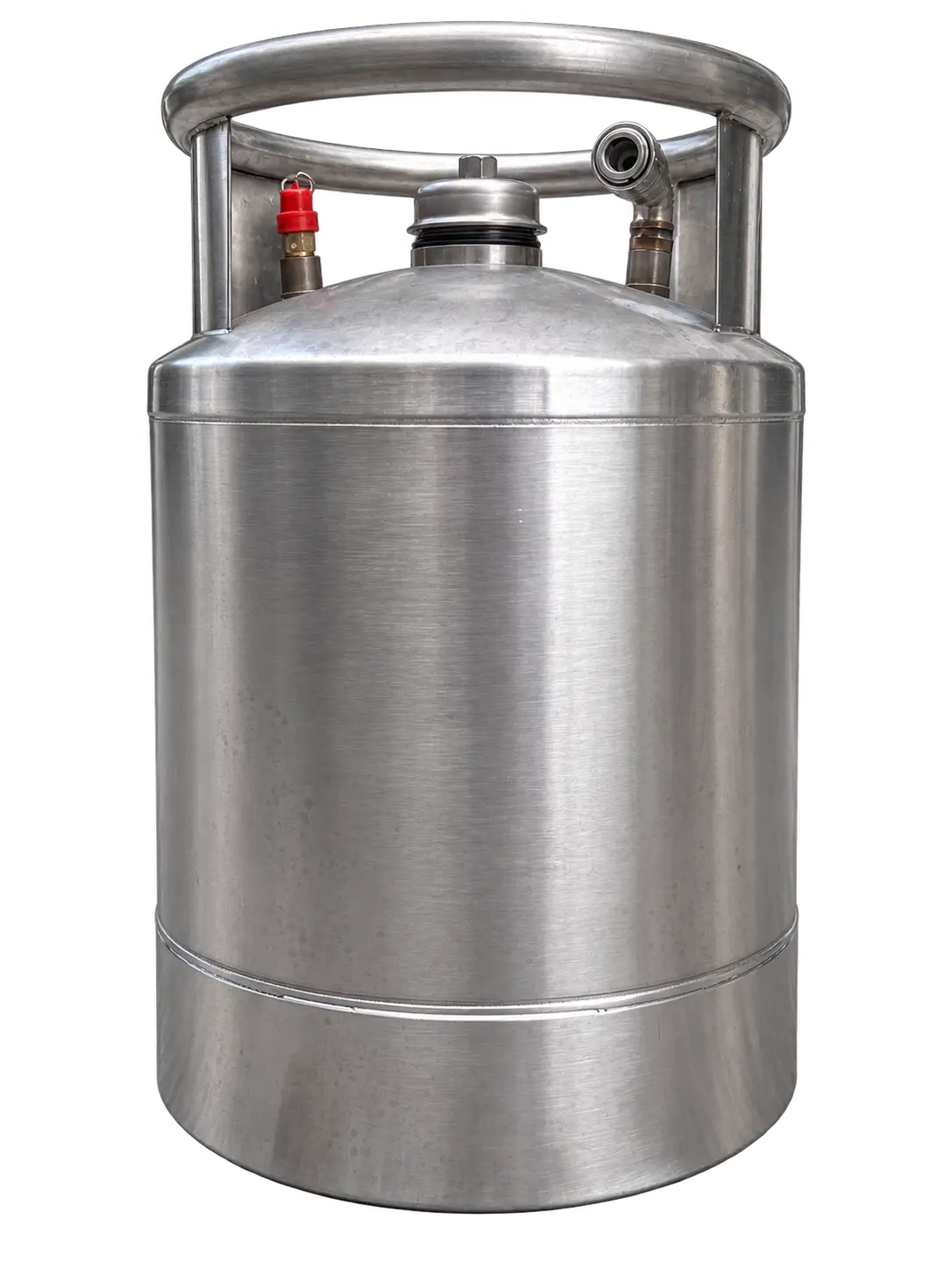
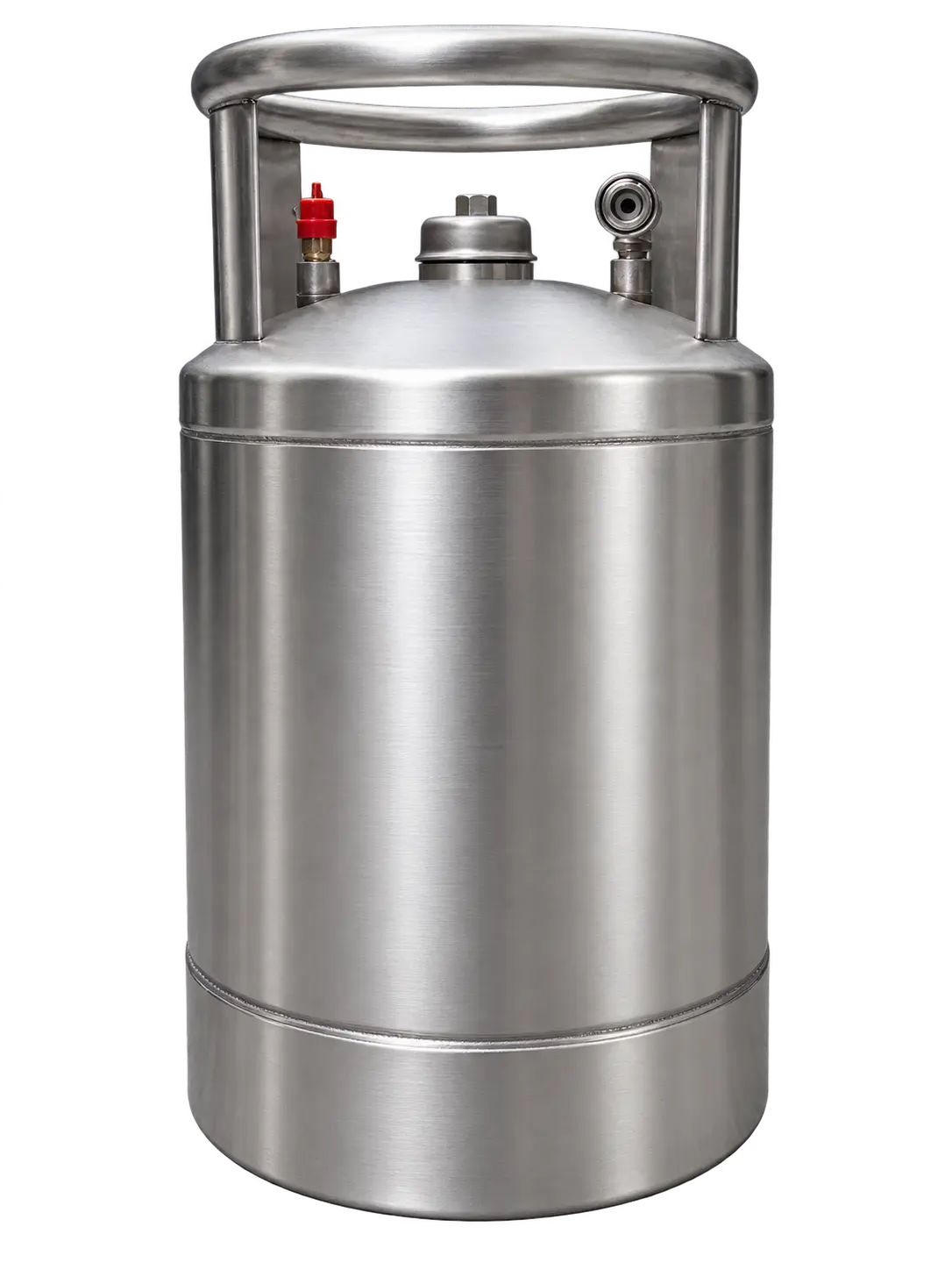
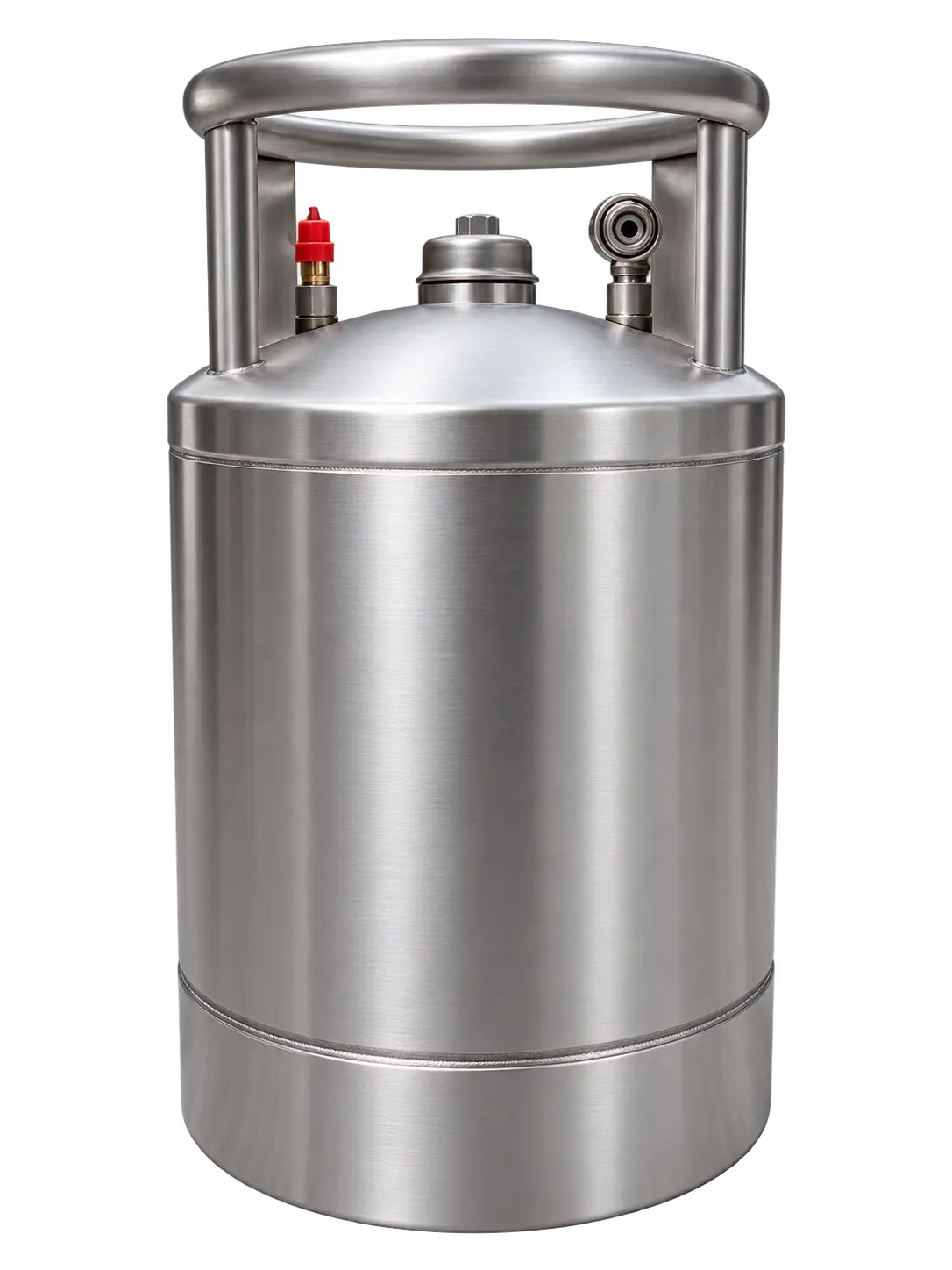
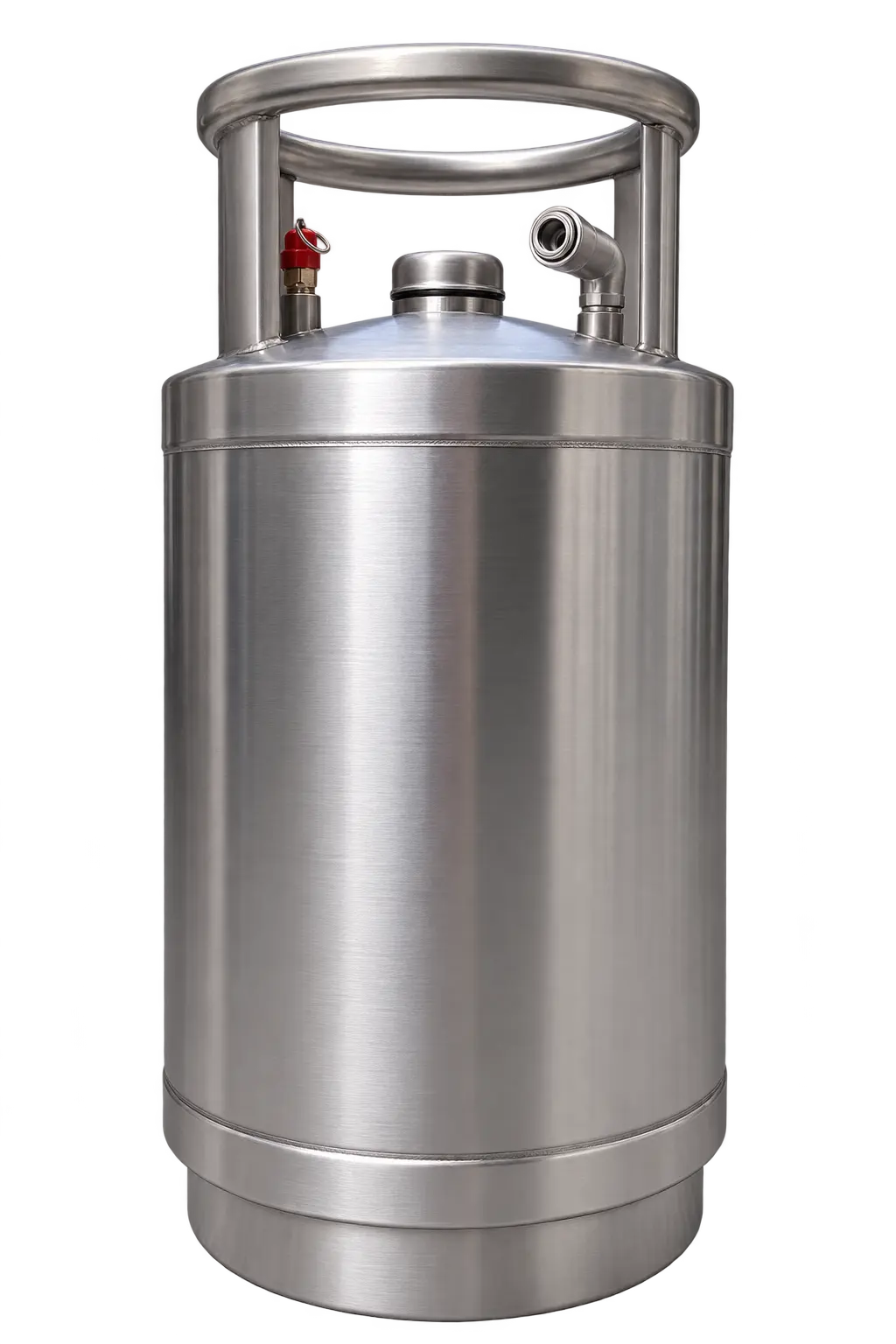
Four individually documented tank options
How the tank connects to the stove
The standard connection is a 1.5 m 304 stainless-steel hose. The tank end uses the matched tank connection and the stove end uses an M12 connection. The hose route should avoid sharp bends, rubbing, heat exposure and accidental pulling.
The current tank is a closed atmospheric liquid-fuel container, not a pressure vessel fed by an external regulator. Its top fittings include a center filling cap, a fuel outlet and an automatic pressure-relief valve. The valve opening pressure has not yet been confirmed, so do not publish or design around an assumed value.
How to choose among 15 L, 20 L, 25 L and 30 L
- 15 L: lowest documented empty and filled handling weight; suitable when installation space or portability is the first constraint.
- 20 L: more stored fuel while retaining the 300 mm documented diameter.
- 25 L: Ø320 mm body, 520 mm total height and approximately 25.2 kg reference filled total.
- 30 L: Ø320 mm body, 570 mm total height and approximately 29.8 kg reference filled total for the longest expected runtime among the current options.
Actual runtime depends on burner count, selected heat level, fuel characteristics and operating pattern. It should be measured on the completed system instead of calculated from capacity alone.
Fuel verification before sample approval
The current stove sample has operated on 97% bulk ethanol directly, without adding water, dye, Bitrex or another additive. Methanol has also been tested separately. These observations do not prove universal compatibility with every locally sold alcohol fuel.
- Obtain the fuel supplier's certificate of analysis (COA) and safety data sheet (SDS).
- Confirm alcohol type, concentration, water content, denaturants, additives and visible contamination.
- Test the exact local fuel sample in the proposed stove configuration.
- Record ignition, flame stability, heat adjustment, shutdown behavior and residues.
- Because the current sample has no built-in filter, filter bulk or inconsistently clean fuel before filling under the approved procedure.
Buyer questions
Which ethanol tank sizes are currently documented?
Joelwave currently documents 15 L, 20 L, 25 L and 30 L stainless-steel fuel tanks for the blower-assisted ethanol stove platform.
Does the ethanol tank need an external pressure regulator?
No. The current tank is a closed atmospheric liquid-fuel container and is not externally pressurized. It includes an automatic pressure-relief valve; the valve opening pressure still requires supplier confirmation.
How do I check the fuel level?
The current tank has no level gauge or sight glass. Control the fill quantity by weighing. Use the actual fuel density for final filling instructions.
What hose connects the tank to the stove?
The standard hose is 1.5 m long and made from 304 stainless steel, with the matched tank-end connection and an M12 stove-end connection.
Can 97% bulk ethanol be used directly?
The current sample has been tested with 97% bulk ethanol without added water, dye, Bitrex or another additive. This is sample evidence, not a universal fuel approval. Review the COA and SDS and test the exact local fuel sample before use.
Does the system have a built-in fuel filter?
The current sample does not have a built-in filter. Bulk fuel or fuel of inconsistent cleanliness should be filtered before filling, subject to the project's approved operating procedure.