Household clean cooking
For brands, distributors and project developers evaluating ethanol as an alternative household cooking fuel. Fuel specification, emissions, efficiency and local programme requirements must be validated for the final product.
Clean cooking · Off-grid cooking · Emergency backup
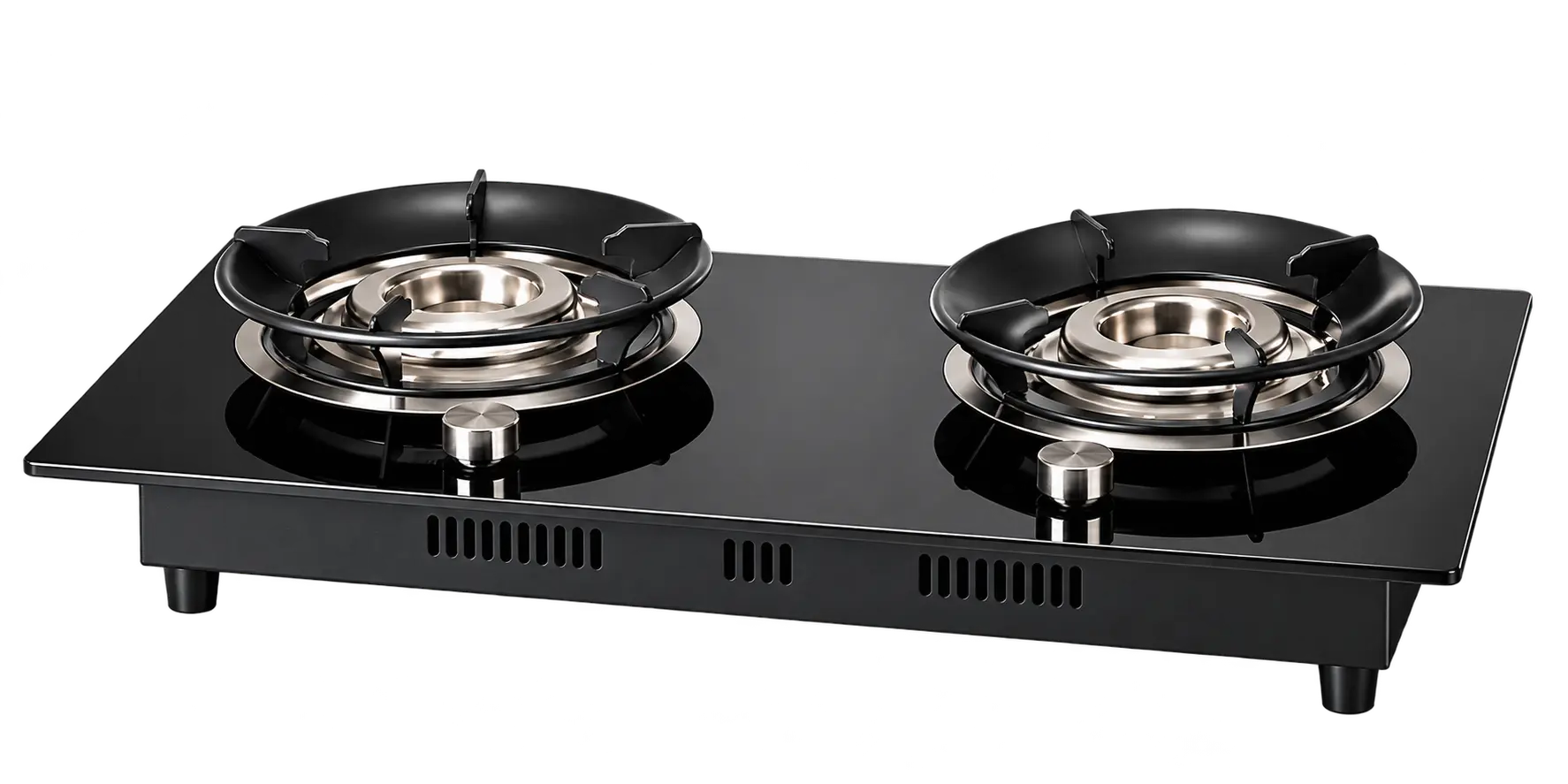
An OEM platform for household clean-cooking projects, off-grid and mobile cooking, and emergency backup applications. It combines a glass cooktop, matched fuel-delivery and air components, electronic control and a separate stainless-steel storage tank.
Power clarification: the system does not require mains electricity or pipeline gas, but it does require ethanol fuel and a suitable 12V DC supply from a battery, vehicle system or compatible off-grid power source.

Operating evidence · 22 seconds
This factory-recorded video shows the burner flame on the current blower-assisted ethanol stove development sample during operation.
The clip is visual operating evidence only. It is not an emissions, efficiency, safety or certification test; these requirements must be validated for the final product and destination market.
Buyer quick answer
Joelwave supplies a blower-assisted, tank-fed ethanol cooking platform for household clean-cooking, outdoor, off-grid and emergency-backup projects. The current platform uses 12V DC electronic control, requires no preheating, and is available as a 5 kW single-burner or 10 kW double-burner system with 15 L, 20 L, 25 L or 30 L stainless-steel tanks.
Application positioning
For brands, distributors and project developers evaluating ethanol as an alternative household cooking fuel. Fuel specification, emissions, efficiency and local programme requirements must be validated for the final product.
For outdoor, campervan, marine and other 12V-powered appliance projects where pipeline gas may not be available. Installation, ventilation, vibration, tilt and fuel storage require application-specific engineering.
For preparedness and humanitarian-supply projects that need an alternative cooking option during mains-power or gas-supply interruptions, provided ethanol fuel and a suitable 12V DC source are available.
A matched system

A dedicated air component works with the burner and controller. Airflow, fuel delivery and control logic must be validated together.
The stove connects to an external stainless-steel tank, allowing the storage arrangement to be defined around the intended installation.
The current platform is rated at 5 kW for the single-burner model and 10 kW for the double-burner model, with five fuel-flow levels for heat adjustment.
Direct 12V DC input, 40 W during ignition and 5 W during normal operation—with no preheating cycle required.
Glass size, burner count, controls, enclosure, packaging and documentation can be developed for qualified distribution projects.
System components

Documented stainless-steel fuel tanks
All four current options are closed atmospheric liquid-fuel containers. They use a center filling cap, a matched fuel outlet and an automatic pressure-relief valve; no external pressure regulator is used. Fuel level is controlled by weighing because the current tanks do not include a gauge or sight glass.
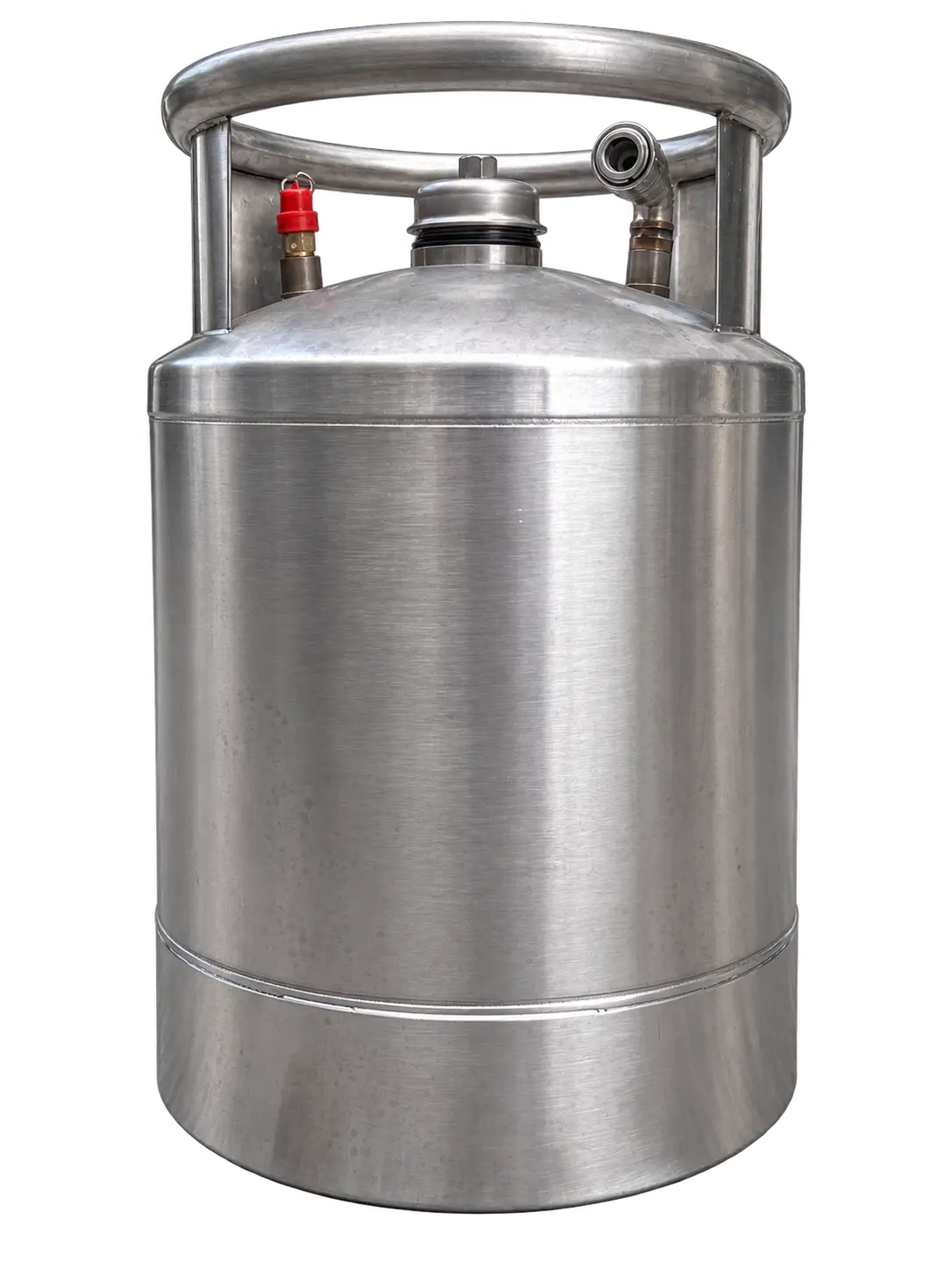
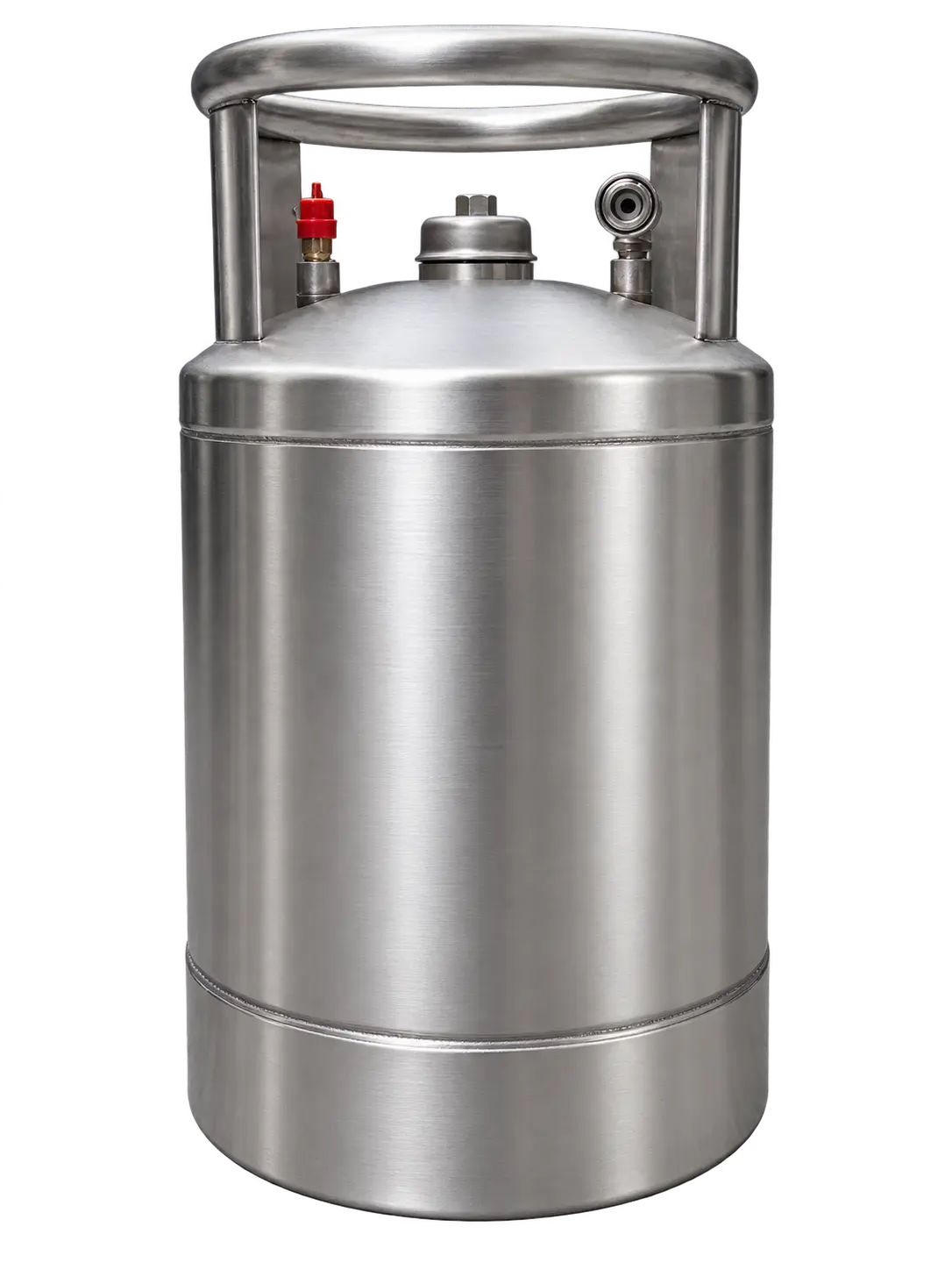
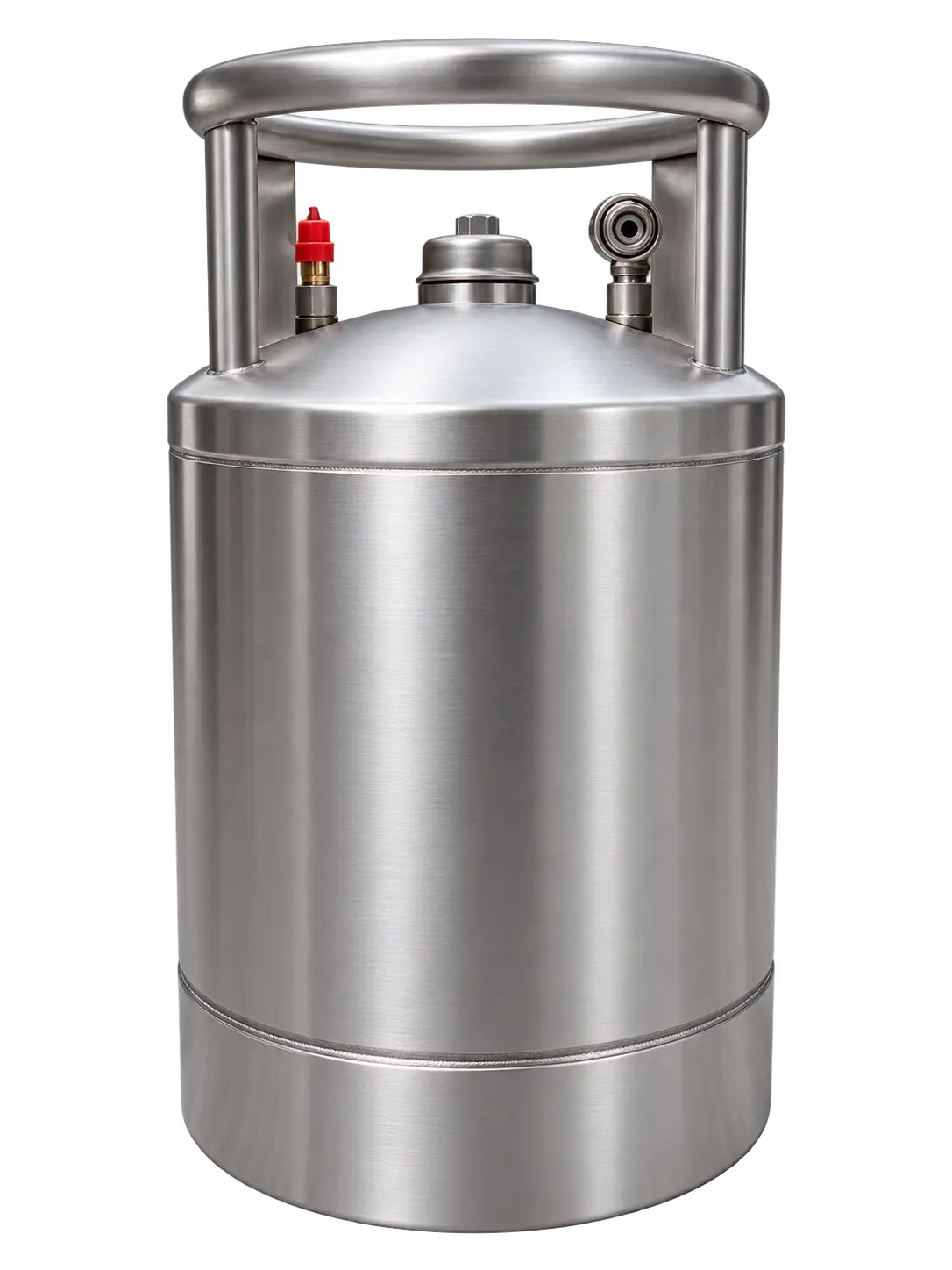
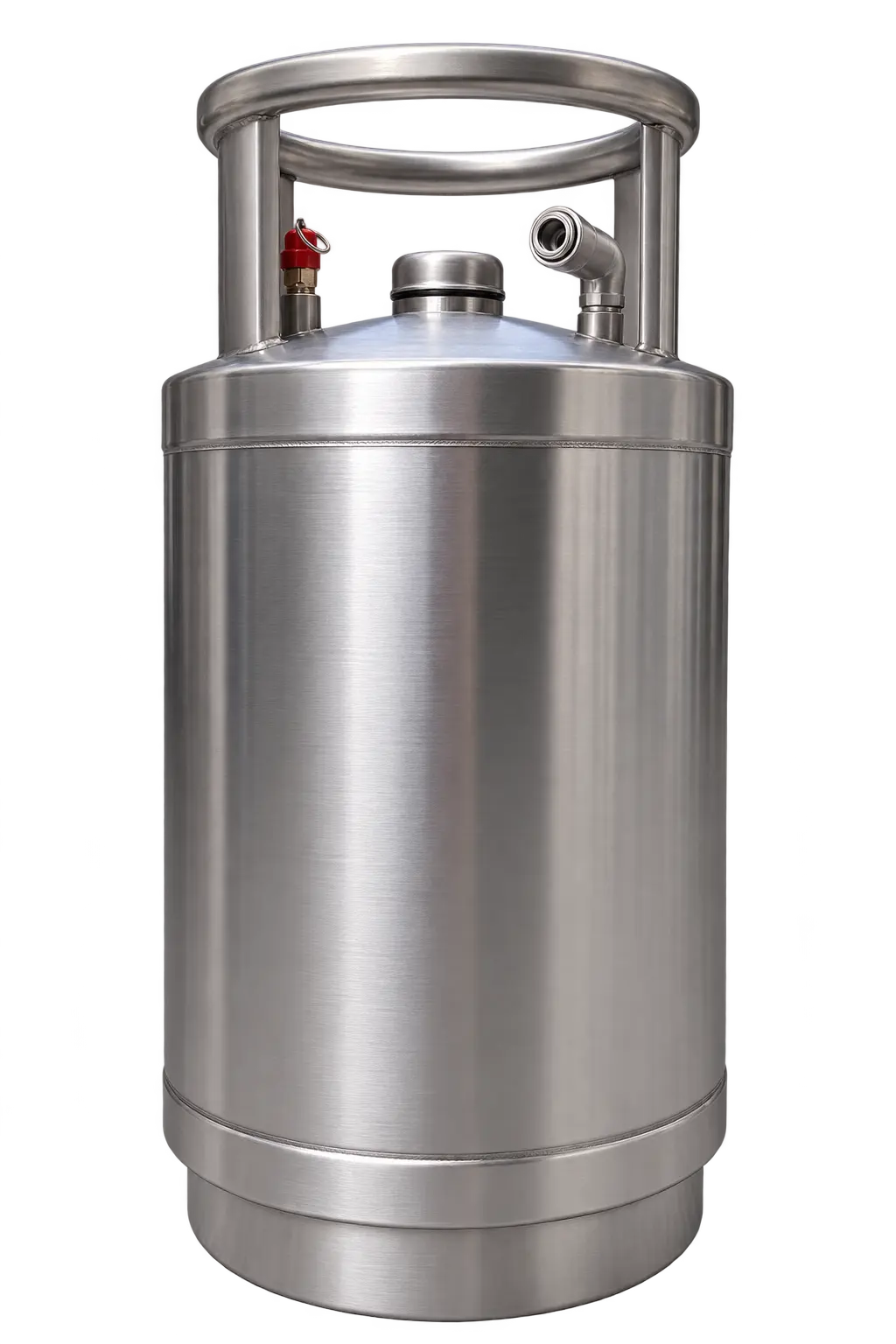
| Tank | Supplier size | Empty weight | Reference ethanol mass* | Reference filled total* |
|---|---|---|---|---|
| 15 L | Ø300 × H420 mm | 4.5 kg | 12 kg | 16.5 kg |
| 20 L | Ø300 × H460 mm | 5.0 kg | 16 kg | 21.0 kg |
| 25 L | Ø320 × H520 mm | 5.2 kg | 20 kg | 25.2 kg |
| 30 L | Ø320 × H570 mm | 5.8 kg | 24 kg | 29.8 kg |
*Reference fuel and filled weights use 0.8 kg/L for planning; confirm the actual density and fill mass for the purchased fuel. The confirmed 30 L tank dimensions are Ø320 mm × H570 mm.
Standard connection: 1.5 m 304 stainless-steel hose, matched tank-end connection and M12 stove-end connection. Read the fuel-tank selection and fuel verification guide →
Configuration pathway
Destination country, clean-cooking, off-grid/mobile or backup application, installation environment, permitted fuel specification and compliance route.
Single or double burner, 15 L, 20 L, 25 L or 30 L tank, tank location, fittings, 12V power source, controller and required exterior format.
Confirm fuel delivery, airflow, ignition, heat adjustment, shutdown behaviour, leakage control, ventilation, tilt/vibration needs and operating instructions.
Confirmed from photographed samples
These figures describe the current-generation development platform: 5 kW single burner, 10 kW double burner, five fuel-flow levels, 12V DC input, 40 W ignition power and 5 W normal operating power. No preheating cycle is required, and safety-critical system components are tested before shipment. Fuel specification, power-supply capacity, connectors, tank, fittings, ventilation, installation, acceptance criteria and local compliance requirements must still be confirmed for each destination market and final order.
Buyer questions
It does not require a mains-electricity connection or pipeline gas, but it is not a no-power stove. The current platform requires ethanol fuel and a suitable 12V DC supply from a battery, vehicle electrical system or compatible off-grid power source.
Yes, it can be evaluated as an OEM backup-cooking platform for situations where mains electricity and pipeline gas are unavailable. Ethanol supply, 12V DC power, ventilation, fuel storage, installation and local safety requirements must still be planned for the final application.
It is a development platform for qualified OEM integration, not a universal drop-in appliance. The completed product must be evaluated for ventilation, fuel storage, spill and leak control, heat clearance, vibration, tilt, shutdown behaviour and the destination market's rules before use.
The current sample has been operated with 97% bulk ethanol without adding water, dye, Bitrex or another additive. Methanol has also been tested separately, but this does not establish universal fuel compatibility. Confirm the supplier COA and SDS, then test the exact local fuel sample before approval.
The current development platform includes single- and double-burner glass-cooktop configurations. Final dimensions, pan supports, controls and exterior details are confirmed against the buyer's project requirements.
The system combines a fuel-delivery component, air blower, 12V DC controller and burner. The current generation no longer needs a preheating cycle: connect the specified 12V DC supply and operate it according to the project instructions. These components must still be matched and validated as one system.
The current single- and double-burner platform uses a 12V DC input. Rated electrical consumption is 40 W during ignition and 5 W during normal operation. The power supply, connector and cable specification must be confirmed for the final project.
Yes. The current development platform provides five fuel-flow levels. Final low-fire performance, cookware response and fuel consumption must be validated with the specified ethanol fuel and completed installation.
Safety-critical system components are tested before shipment. The final inspection scope, acceptance criteria and records are agreed for the order, while installation and destination-market compliance remain the buyer's project responsibilities.
No. Ethanol fuel is not included with sample shipments. The stove and fuel circuit must be drained and purged before dispatch, and the selected carrier must confirm in writing whether the prepared shipment can be accepted as non-dangerous goods.
The current documented options are 15 L, 20 L, 25 L and 30 L stainless-steel tanks. Each is a closed atmospheric liquid-fuel container with a filling cap, fuel outlet and automatic pressure-relief valve. The tank does not use an external pressure regulator and has no built-in level gauge or sight glass.
The current tanks do not have a level gauge or sight glass. Fuel quantity should be controlled by weighing during filling. The reference ethanol mass is approximately 12 kg for 15 L, 16 kg for 20 L, 20 kg for 25 L and 24 kg for 30 L, based on 0.8 kg/L for planning only.
The standard hose is 1.5 m long and made from 304 stainless steel. The tank end uses the matched tank connection and the stove end uses an M12 connection. Final routing, bend radius and installation protection must be confirmed for the project.
Yes. OEM scope can include cooktop format, exterior appearance, controls, packaging, instructions and agreed tank configuration. Samples and project-specific technical confirmation are required before production.
Pricing depends on burner count, glass and enclosure dimensions, tank capacity, fittings, electrical configuration, testing, packaging and order quantity. We prepare confidential B2B quotations after the application and destination market are confirmed.
Before requesting a quotation
Destination country, household, outdoor, off-grid, mobile or emergency-backup application, and intended installation environment.
Single or double burner, expected heat output, 15 L, 20 L, 25 L or 30 L tank, tank location and available 12V DC power source.
Fuel COA and SDS, local fuel sample, expected quantity, packaging, private-label scope, testing requirements and destination-market compliance route.
Related capabilities: fuel-control components and metal parts · send a project enquiry.
Request a confidential quotation
We will identify the fuel, tank, electrical, ventilation, installation, testing and OEM questions required before preparing a project quotation.