In a water-flow-triggered gas water heater, opening a tap creates water flow inside the water–gas linkage assembly. The moving magnetic element activates a two-wire reed switch. When the appliance selector switch is also in the operating position, the circuit can signal the pulse ignition controller to begin the matched ignition and gas-control sequence. “Low-water-pressure starting” does not mean that the appliance can start without water flow.
Product knowledge base
Verified components used in this guide

1. Water flow creates the start condition
When a user opens the hot-water tap, water moves through the heater. In the illustrated low-pressure-starting architecture, the water movement changes the position of an internal magnetic element rather than relying on a traditional pressure-differential start mechanism.
The expression “low-water-pressure starting” describes the operating architecture. It does not mean zero pressure, zero flow or guaranteed starting under every installation condition. Minimum flow and hydraulic requirements must be confirmed for the exact appliance.
2. The reed switch changes electrical state
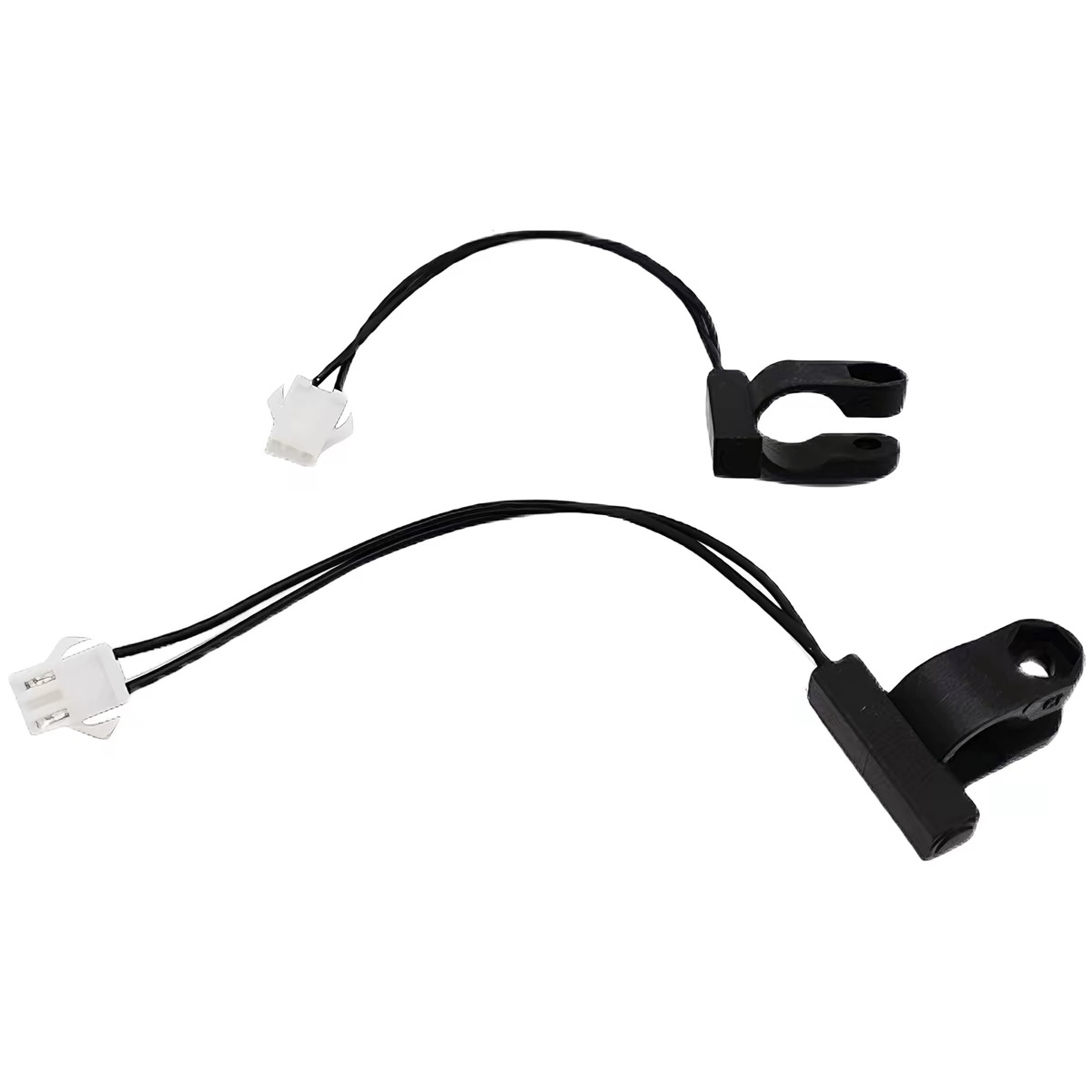
The confirmed sensing component in this knowledge-base example is a two-wire magnetic reed switch. As the magnet moves close to the switch, its internal contacts close and provide an electrical start signal.
A reed switch is an electromechanical magnetic contact. It should not be described as a Hall sensor, which is an electronic sensing device with different operating and wiring characteristics.
3. The selector switch completes the operating circuit
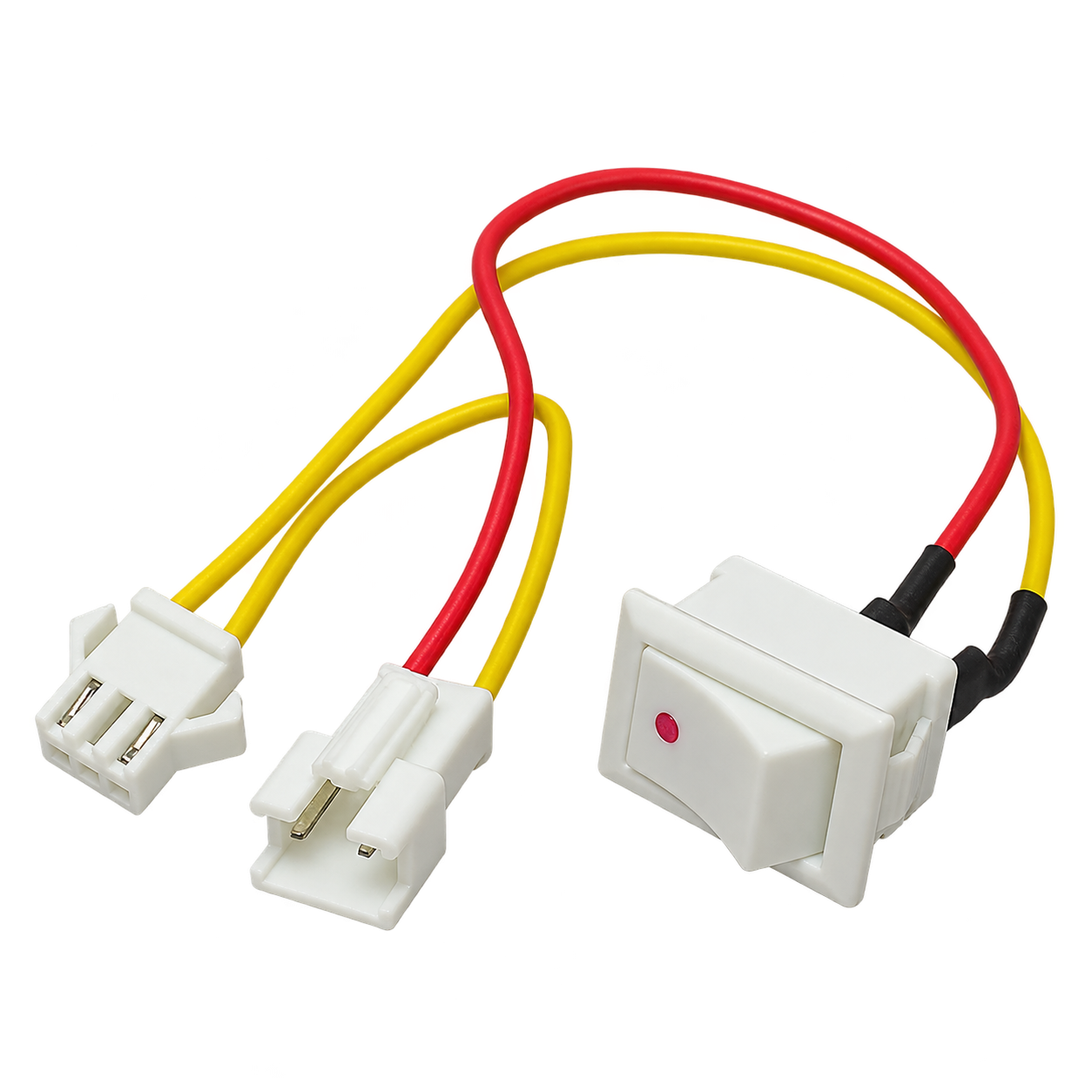
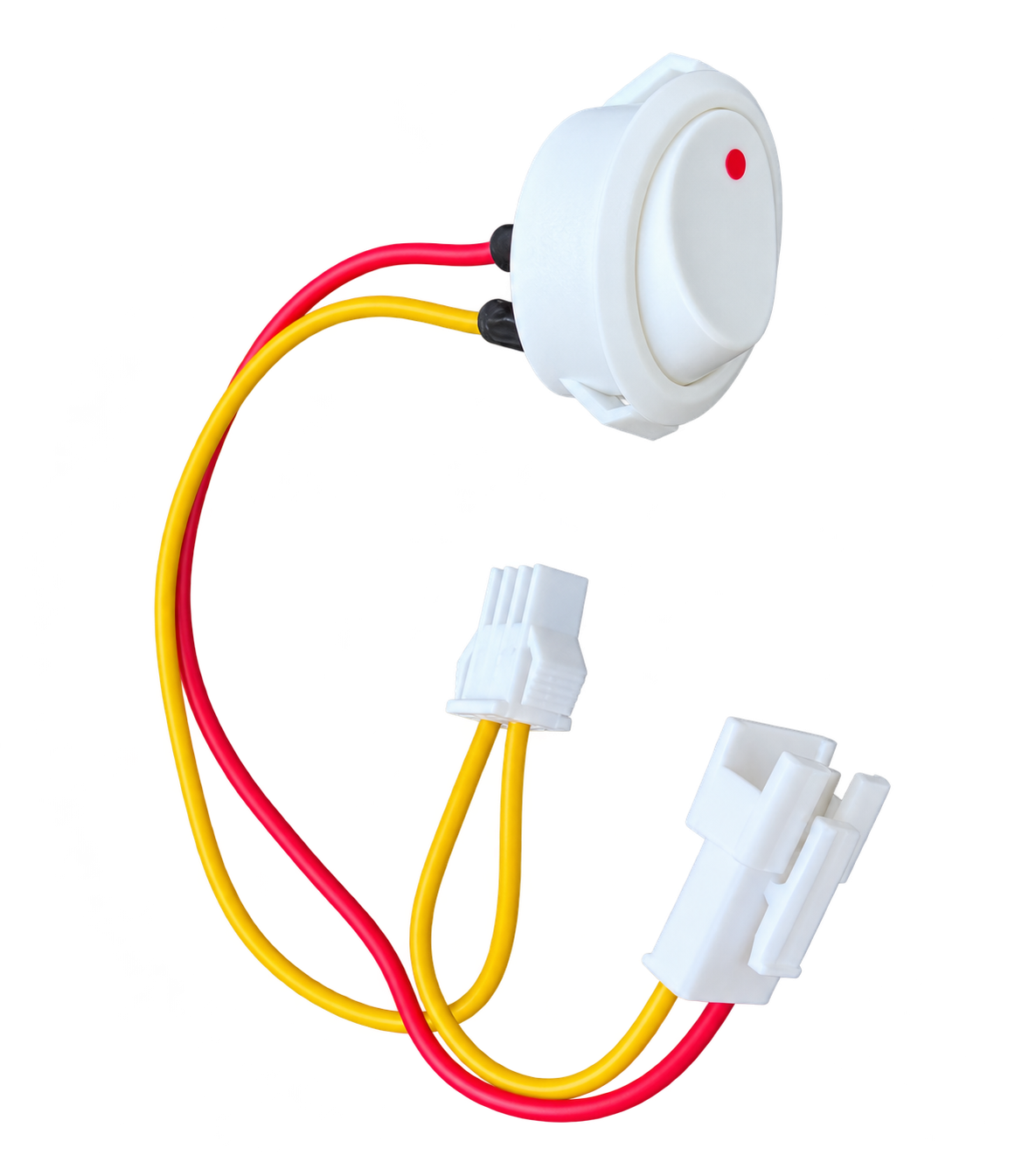
The reed switch and the appliance’s hot/cold selector switch are connected as part of the start circuit. Water flow alone should not be treated as the only condition: the user-operated switch must also be in the intended operating position before the pulse ignition controller receives the start request.
Square and round switch bodies are both used in the market. Buyers should confirm the mounting opening, connector, wire functions, switching logic and appliance panel before approving a replacement.
4. The pulse controller begins the matched ignition sequence
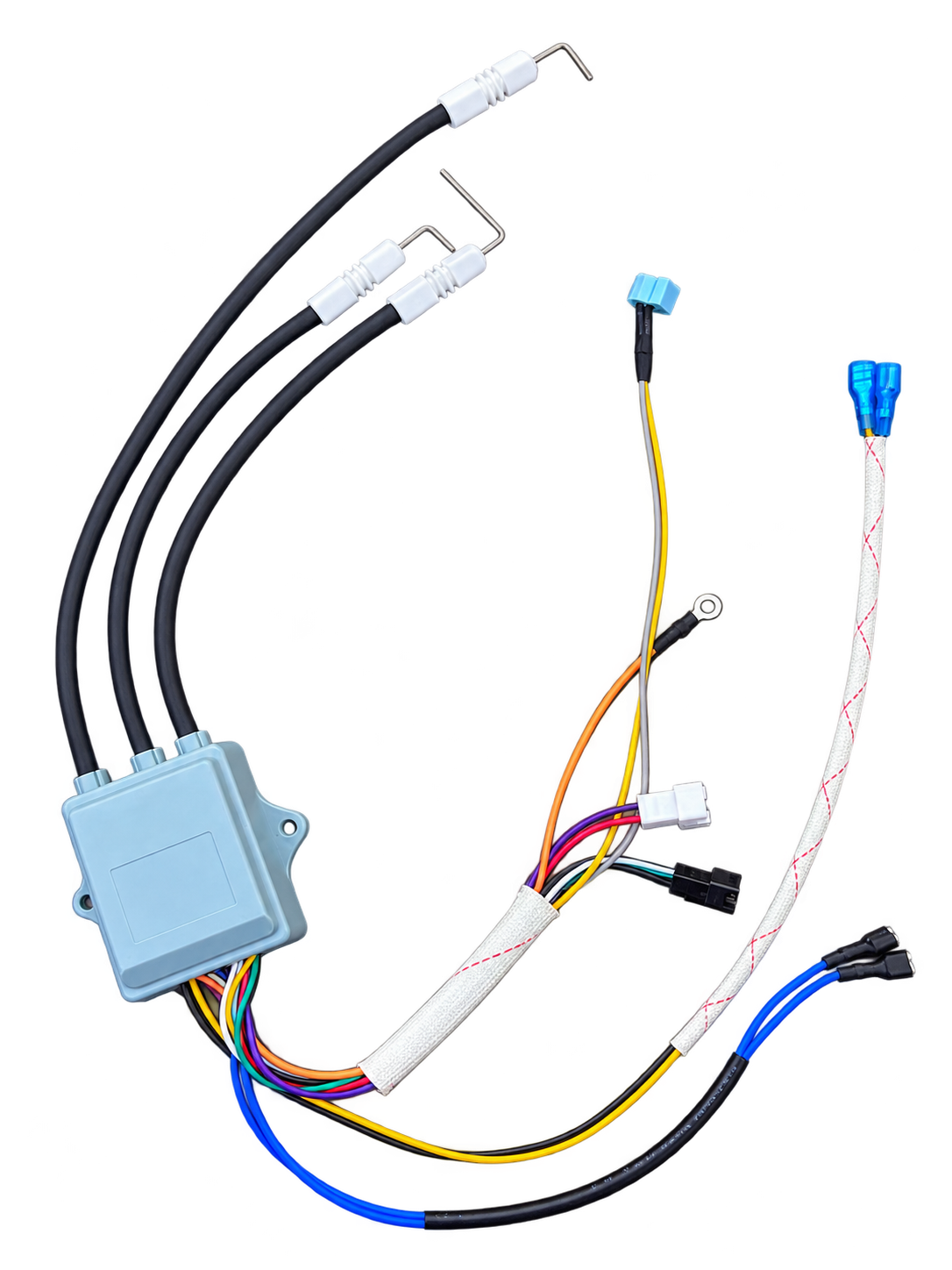
After the start conditions are met, the pulse ignition controller produces high-voltage spark output through the ignition leads and coordinates the related appliance outputs according to its wiring and control design. The photographed Joelwave example uses a light-gray enclosure, three high-voltage leads and a multi-wire harness.
The number of leads does not by itself define every function. Electrode purpose, flame feedback, valve connection, timing, input supply and connector pinout must be confirmed from the approved sample or wiring specification.
5. Match and test the complete assembly
A correct replacement requires more than the same enclosure shape. The water–gas valve, reed switch, selector switch, pulse controller, ignition electrodes, connectors and burner arrangement should be reviewed as one functional group.
For an RFQ, send clear front and rear photos, the original wiring and connector layout, supply information, appliance model, mounting dimensions and a short video of the original start sequence. The final matched set should be tested in the intended appliance before production release.
Buyer questions
Is a two-wire reed switch the same as a Hall water-flow sensor?
No. A reed switch uses magnetically operated contacts. A Hall sensor is an electronic device and normally has different wiring and signal behavior. The component must be identified from its actual construction and circuit.
Does low-water-pressure starting mean the heater needs no water pressure?
No. It means the design does not depend on the same traditional pressure-differential start mechanism. Water still has to flow through the appliance, and model-specific hydraulic requirements still apply.
Can a square switch replace a round switch?
Not from appearance alone. Confirm the panel opening, mounting method, connector, wire functions and switching logic before replacement.
Why can a heater spark but still fail to ignite?
Spark presence proves only part of the sequence. Electrode position, gas supply, valve operation, burner condition, flame feedback and controller logic may also affect ignition. Gas-appliance diagnosis should be carried out by qualified personnel.