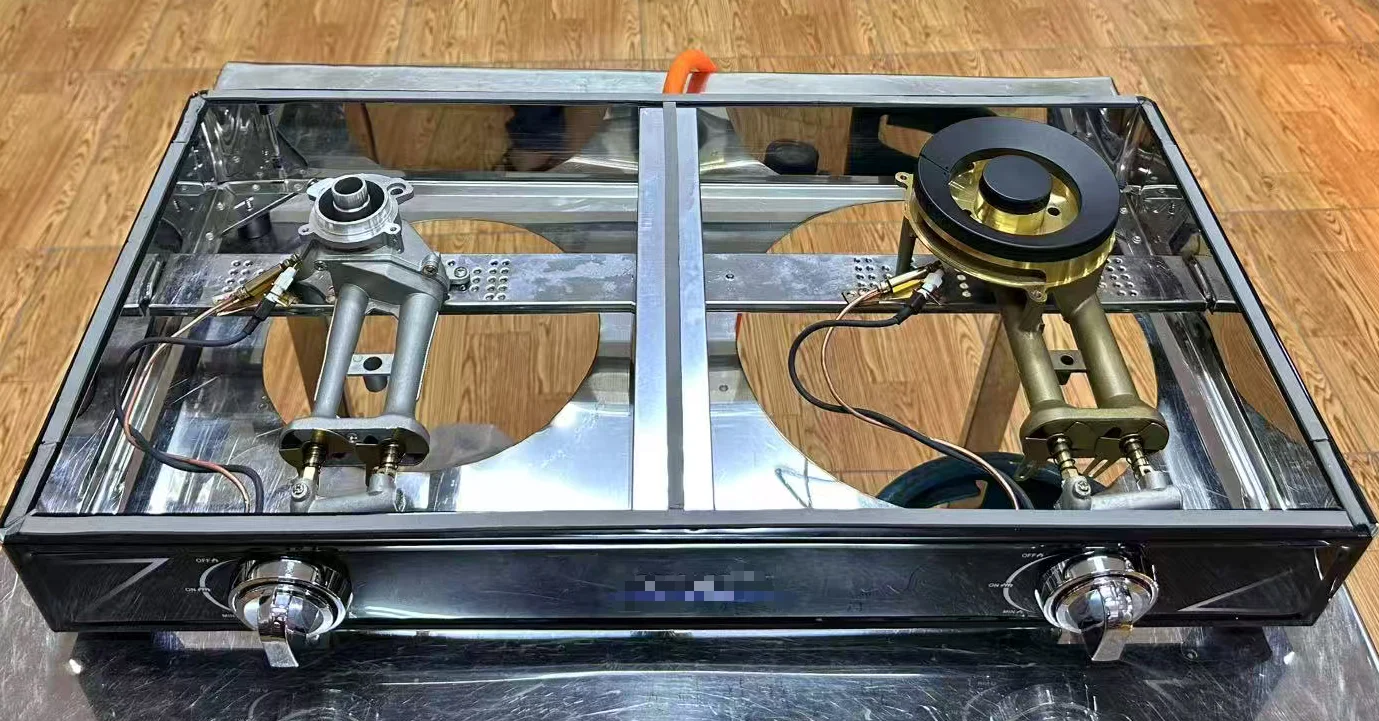
A Vietnamese manufacturer assembling gas stoves approached Joelwave while developing a tabletop model with a double-ring burner and matching caps. The customer wanted a cylindrical ignition electrode positioned at the burner core to ignite the inner ring directly. This case documents the component-matching work, development photos and sample discharge checks shared by Minato Yang. The customer is not named.
The request: bring the ignition point to the inner ring
The customer's existing rotary plug valve used piezo ignition with a side pilot arrangement. According to the project account, the electrode and pilot location were relatively far from the burner, contributing to inconsistent lighting. The requested change was direct ignition at the inner ring rather than relying on that remote pilot arrangement.
Feasibility came before component selection
Moving the electrode introduced another matching problem: its position relative to the inner cap and nearby metal. The project review focused on selecting an electrode suited to the cap geometry and establishing the intended discharge path. Poor placement could leave the spark in the wrong location or allow it to discharge toward adjacent metal.
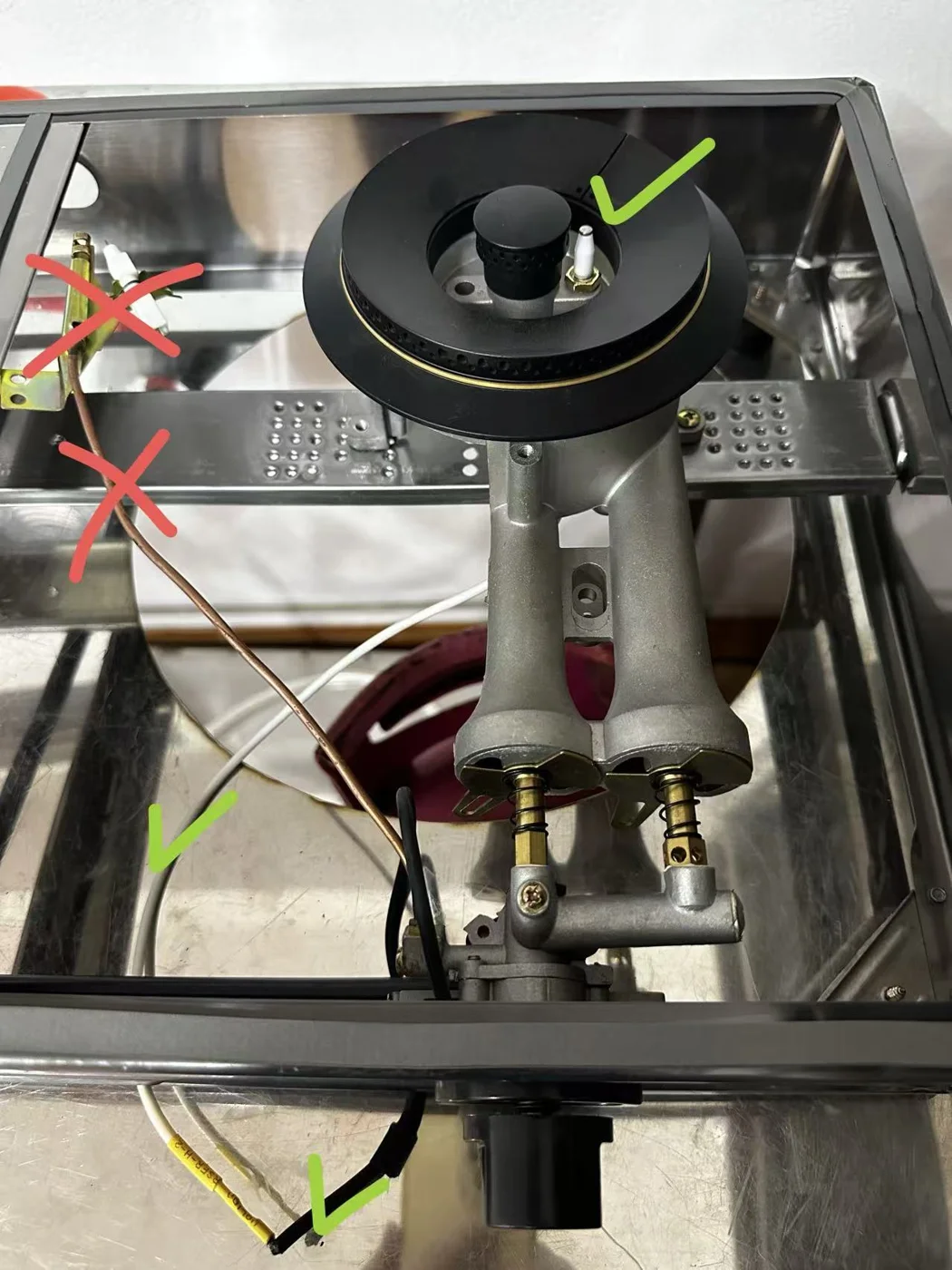
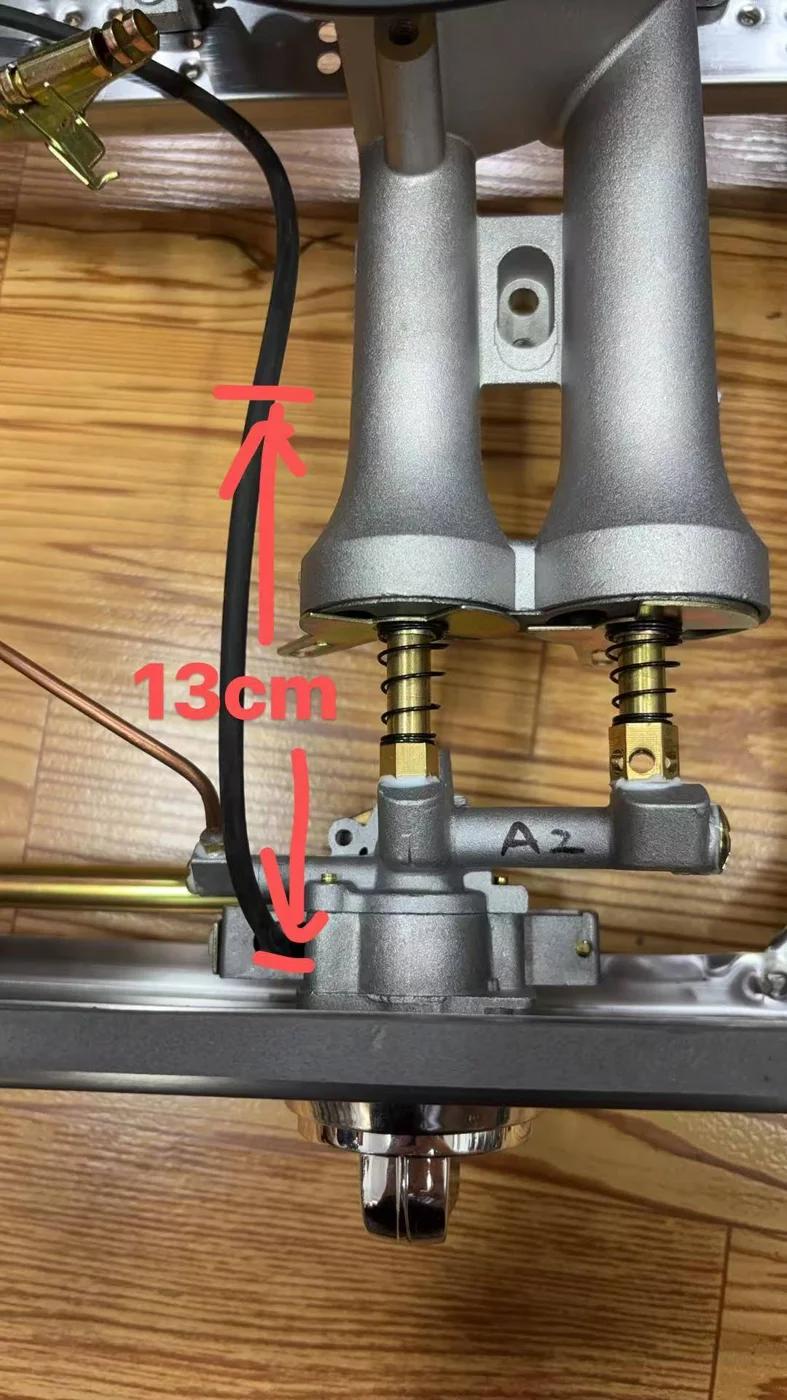
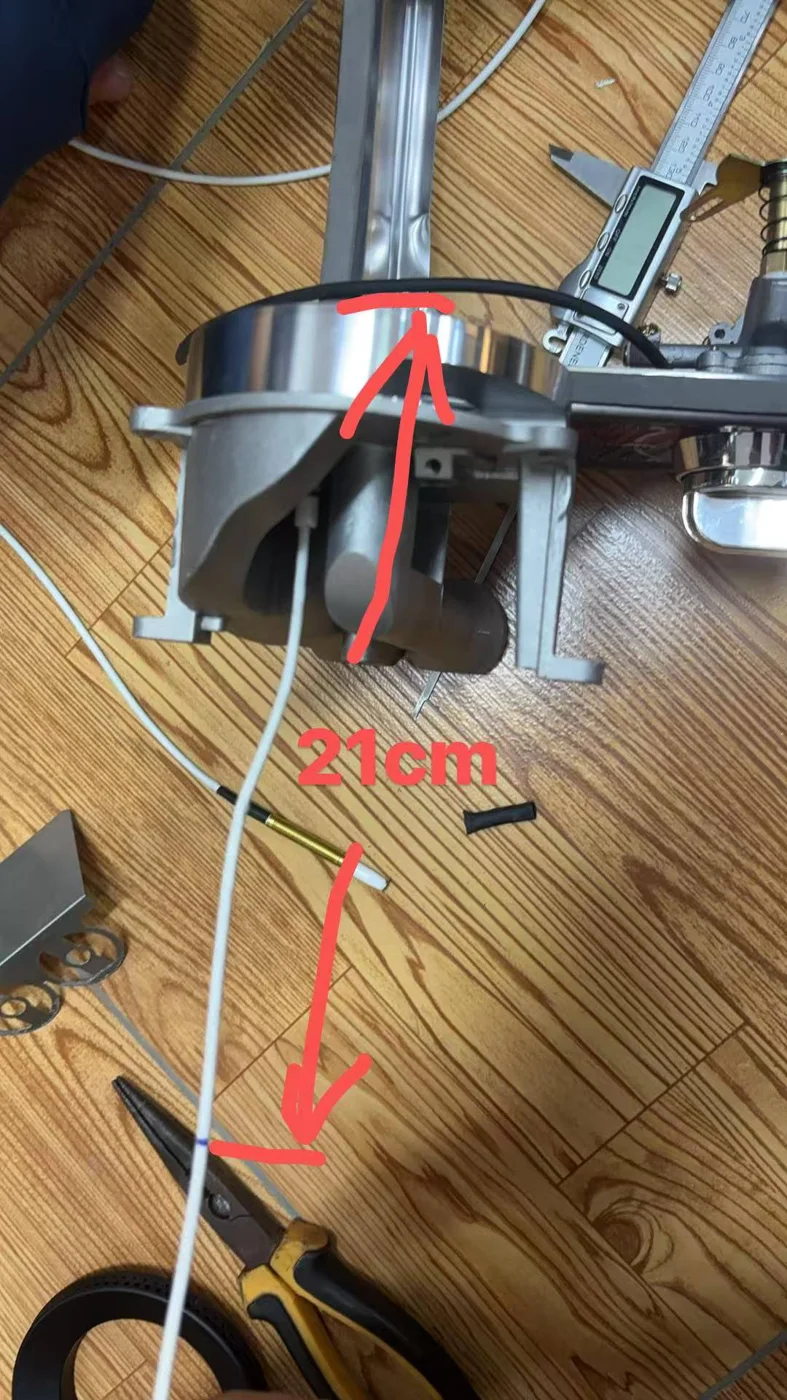
The development team checked electrode length, the mounting envelope and lead routing against the actual assembly. The measurements photographed during this work are development notes for this sample, not universal installation dimensions or released production specifications.
Protecting the ignition lead and its terminals
The project specification called for an ignition lead with suitable silicone or rubber insulation, an additional heat-protective braided sleeve, and protection at the electrode and valve-side connections. Particular attention went to the valve-side terminal because it sits close to the metal valve body.
The reported solution included a protective sleeve and insulating encapsulation at the connection. Material selection, coverage and assembly details were specific to this project; the photos and clips document the development work rather than a general retrofit procedure.
Adapting the pilot configuration
With the electrode positioned for direct inner-ring ignition, the original pilot branch was no longer required. The project account describes sealing the unused pilot outlet and removing the corresponding pilot components. This is a change to the gas-path configuration that needs to be defined and checked as part of the matched valve assembly.
Minato reports approximately RMB 3 per set saved by removing those pilot components. This is a component-level saving from this project, not a quotation or a confirmed net saving after all added insulation and assembly costs.
What the sample checks showed
In the first clip, the valve-side connection has a protective sleeve. Minato confirms that, during this recorded check, the spark reached the inner burner cap and did not discharge to the valve body. The second clip checks spark placement at the burner; Minato confirms that the displayed operations reached the intended cap.
These observations support correct discharge placement in the demonstrated checks. They do not establish a numerical gas-ignition success rate, dielectric certification, thermal-aging result or service-life rating.
Production status and customer feedback
The configuration has entered production and use. According to Minato's account, the customer reports that it broadly achieves the intended goal. No quantified before-and-after ignition rate or long-term reliability dataset is provided for this case.
For a similar OEM request, the useful starting materials are the actual burner and cap, valve configuration, electrode mounting details, lead route and the customer's observed issue. Reviewing these together helps turn a component request into a coordinated assembly specification.
Development photos and discharge checks
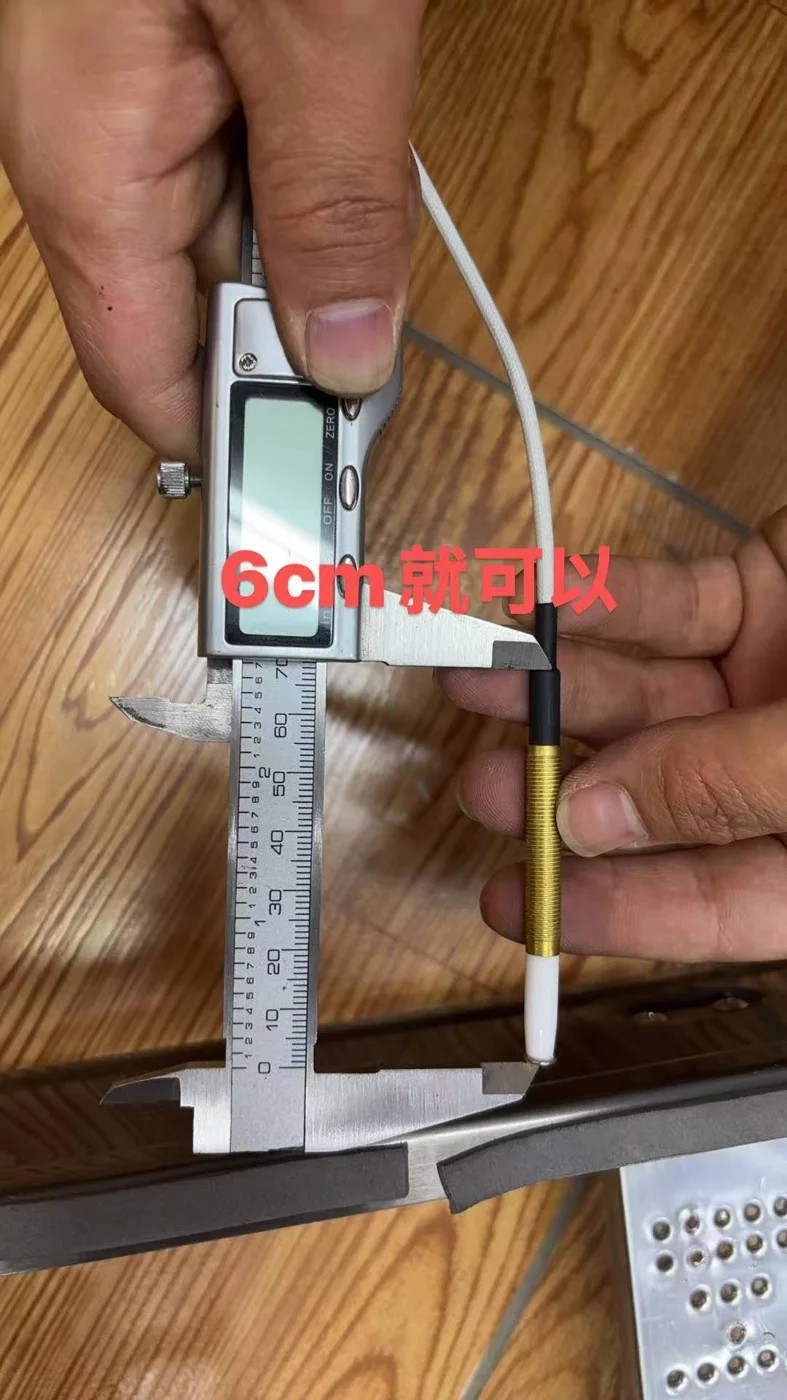
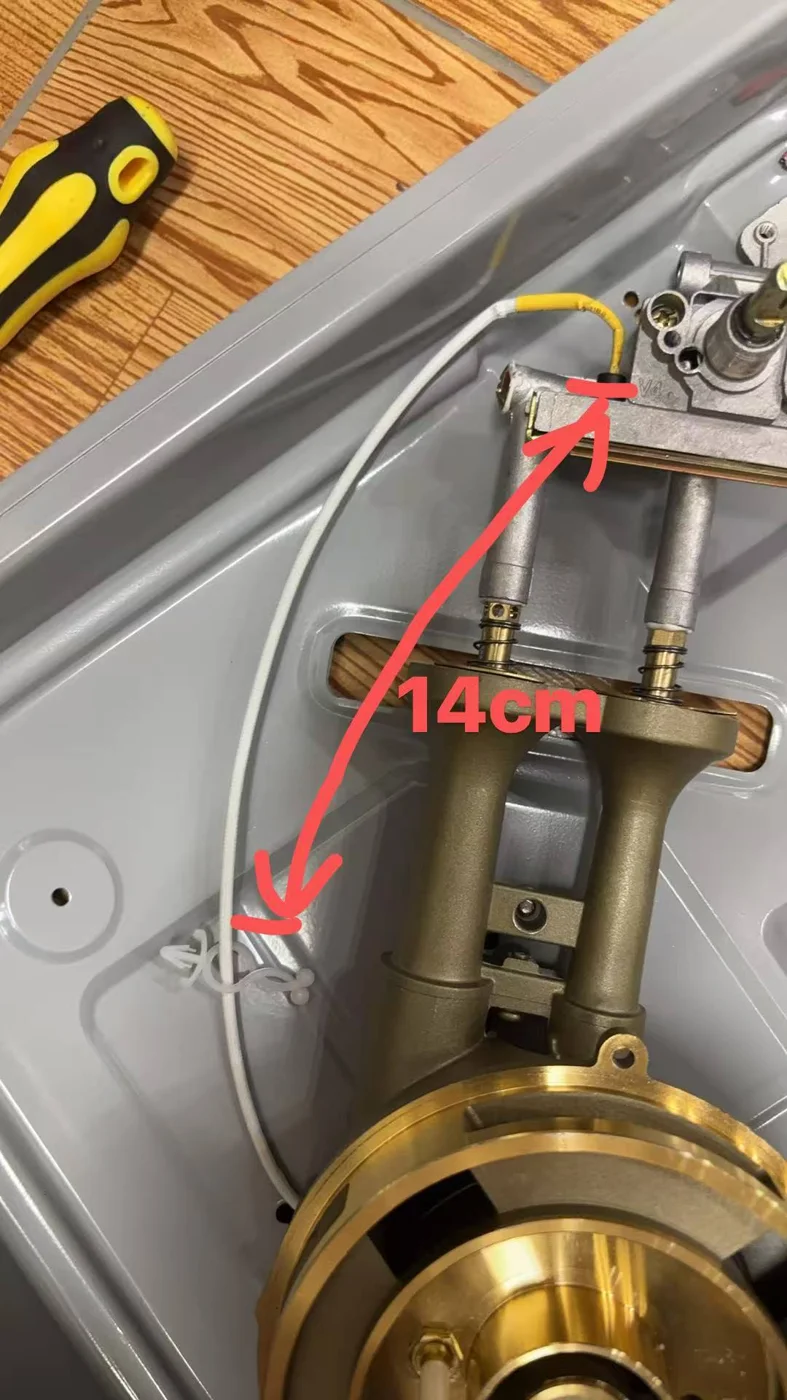
Valve-side insulation check
Burner spark-placement check
Buyer questions
Can the dimensions in these photos be used for another stove?
They are sample-development annotations. Another burner, cap or chassis needs its own dimensional review and approved specification.
Do the videos demonstrate a measured ignition success rate?
No. They document spark-placement checks, with the observed result confirmed by Minato. The production feedback is qualitative.